Protein in 1 egg: how many grams for each Thai egg size, and how boiled, fried and egg white compare
Key takeaways
- A size 2–3 Thai egg has about 6–7 g of protein and 64–75 kcal
- Your body absorbs about 91% of cooked egg protein but only about 51% from raw eggs
- Healthy adults can average 1 egg a day; with abnormal blood fats, 3 a week at most
The protein in 1 egg is about 6–7 g, with about 64–75 kcal, for the size 2–3 eggs most people buy in Thailand. The white of one egg has about 3.5 g of protein and the yolk about 2.7 g, based on Mahidol University's Institute of Nutrition and USDA data. Boiled and raw eggs have about the same protein, while fried eggs and Thai omelets have more calories from the oil.
In this guide (6 sections)
- Protein in 1 egg: how many grams for each Thai egg size?
- Boiled, fried, omelet or steamed: how do protein and calories compare?
- How much protein is in 1 egg white, and should you choose whites or whole eggs?
- How many eggs can you eat a day?
- How do you use eggs to reach your daily protein?
- How do eggs compare with other high protein foods?
Protein in 1 egg: how many grams for each Thai egg size?
Thai eggs are sold by number, from 0 (largest) to 5 (smallest), based on the weight of the whole egg in its shell under the Thai agricultural standard TAS 6702-2010. The shell is about 13% of the weight, leaving about 87% you can eat, according to the Institute of Nutrition, Mahidol University (INMU). From that, we get this table.
| Thai egg size | Weight in shell | Egg without shell | Protein per egg | Calories per egg |
|---|---|---|---|---|
| Size 0 | over 70 g | over 61 g | over 7.9 g | over 81 kcal |
| Size 1 | 65–70 g | 57–61 g | 7.4–7.9 g | 75–81 kcal |
| Size 2 | 60–65 g | 52–57 g | 6.8–7.4 g | 69–75 kcal |
| Size 3 | 55–60 g | 48–52 g | 6.2–6.8 g | 64–69 kcal |
| Size 4 | 50–55 g | 44–48 g | 5.7–6.2 g | 58–64 kcal |
| Size 5 | 45–50 g | 39–44 g | 5.1–5.7 g | 52–58 kcal |
In short, a medium egg such as size 2 or 3 gives about 6–7 g of protein. Each step up or down in size changes the protein by about 0.6 g per egg.
Boiled, fried, omelet or steamed: how do protein and calories compare?
Protein per 100 g is similar however you cook the egg. What changes a lot is the calories from oil. Boiled and poached eggs add almost nothing, while fried eggs and omelets depend on how much oil you use.
| Hen's egg (per 100 g) | Calories | Protein | Fat | Source |
|---|---|---|---|---|
| Raw, whole | 133 kcal | 13.0 g | 8.3 g | INMU |
| Boiled for 10 minutes | 138 kcal | 13.2 g | 8.3 g | INMU |
| Poached | 143 kcal | 12.5 g | 9.5 g | USDA |
| Fried | 196 kcal | 13.6 g | 14.8 g | USDA |
| Thai omelet (kai jeow) with fish sauce | 361 kcal | 14.0 g | 32.9 g | INMU |
| Thai steamed egg (with water and fish sauce) | 61 kcal | 4.9 g | 3.3 g | INMU |
Per egg, one boiled egg has about 70–78 kcal and about 6.3–6.6 g of protein, based on 50 g of egg using INMU and USDA figures. One large fried egg in USDA data (46 g after frying) has about 90 kcal and the same 6.3 g of protein.
Also, your body absorbs more protein from cooked eggs than raw ones. A study by Evenepoel and colleagues (1998) measured about 91% absorption from cooked egg protein and about 51% from raw. Eating eggs raw gives you no extra protein and carries a higher risk of food poisoning.
How much protein is in 1 egg white, and should you choose whites or whole eggs?
The white of one egg has about 3.5 g of protein and about 17 kcal. These figures are for a USDA large egg, which has about 50 g of egg without the shell, close to a Thai size 3 egg once the shell is removed.
| Part of the egg | Weight | Protein | Calories |
|---|---|---|---|
| Whole egg | 50 g | 6.3 g | 72 kcal |
| Egg white | 33 g | 3.6 g | 17 kcal |
| Yolk | 17 g | 2.7 g | 55 kcal |
| 1 whole egg + 2 egg whites | 116 g | 13.5 g | 106 kcal |
- Egg whites give more protein per calorie, which suits people on a tight calorie budget or anyone adding protein to a meal
- The yolk holds almost all of the egg's fat and cholesterol. According to USDA, egg white has 0 mg of cholesterol, while a 50 g whole egg has about 186 mg
- Whole eggs are still a good, cheap and easy protein source. You do not need to throw away every yolk
- A middle path many people use is 1 whole egg plus 1–2 extra whites
How many eggs can you eat a day?
Healthy adults can eat an average of 1 egg a day, according to Thailand's Department of Health, including healthy working-age adults and older people. For people with high blood pressure, diabetes or abnormal blood fats, the Department of Health suggests no more than 3 eggs a week, or following their doctor's advice.
The American Heart Association's 2019 science advisory says healthy people can include up to 1 whole egg a day, and older people with normal cholesterol up to 2 eggs a day, as part of a heart-healthy eating pattern.
How do you use eggs to reach your daily protein?
Eggs work well for breakfast and as a top-up, because they are easy to cook and keep. Find your daily protein target with our TDEE calculator (in Thai). When losing weight, it uses 1.6 g per kg of target weight. Some ideas:
- Boil several eggs at once and keep them in the fridge, ready for breakfast or a snack
- For breakfast, 2 boiled eggs with 200 ml of low-fat milk give about 20 g of protein
- Fry eggs or make omelets with little oil, or choose steamed or poached eggs on days when you watch calories
- If a main dish is low in protein, add a boiled egg. For example, CleanFit's Miso Soup with Tender Chicken has 100 kcal and 20 g of protein. Add one boiled egg and you get about 26 g
For more breakfast ideas, read weight loss breakfast, and for splitting protein across the day, see protein for weight loss.
How do eggs compare with other high protein foods?
One egg gives less protein than a normal portion of meat. Here is a quick comparison.
| Food | Protein | Calories |
|---|---|---|
| 1 size 3 egg | 6.2–6.8 g | 64–69 kcal |
| Low-fat UHT milk, 200 ml | 7.4 g | 104 kcal |
| Firm white tofu, 100 g | 12.9 g | 126 kcal |
| Skinless chicken breast, raw, 100 g | 24.9 g | 112 kcal |
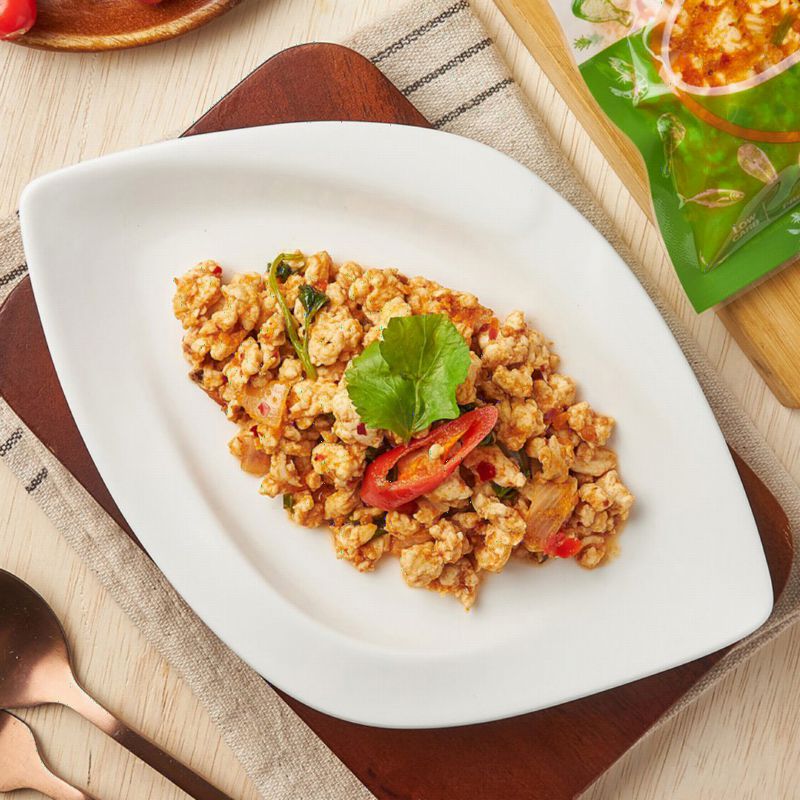
| CleanFit Ok Kai Pha-Lo, 1 meal (no rice) | 30 g | 150 kcal |
See many more foods in high protein foods, and raw vs cooked numbers in chicken breast protein per 100g. If you want high protein main dishes in your freezer to eat with eggs, order a pack and choose every dish yourself.
Frequently asked questions
How many calories are in 1 boiled egg?
About 70–78 kcal for an egg with about 50 g of egg inside the shell, close to a Thai size 3, based on INMU and USDA data. Bigger eggs have more calories in line with their weight.
Do raw eggs give more protein than cooked eggs?
No. A study by Evenepoel and colleagues (1998) found the body absorbs about 91% of cooked egg protein but only about 51% of raw egg protein. Raw eggs also carry a higher risk of food poisoning.
Do duck eggs have more protein than chicken eggs?
Per 100 g they are close: raw duck egg has about 13.9 g of protein and hen's egg about 13.0 g. Duck egg has 173 kcal against 133 kcal for hen's egg, because it has more fat, according to INMU.
Can I eat eggs if I have high cholesterol?
Thailand's Department of Health suggests that people with abnormal blood fats, high blood pressure or diabetes eat no more than 3 eggs a week, or follow their doctor's advice. Egg white has no cholesterol and can add protein, but check with your own doctor first.
Are bigger eggs better value than smaller ones?
Protein per gram is the same. Only the size differs, and a size 0 egg gives about 1–2 g more protein than a size 3. Divide the price of a tray by its total weight to see which is better value for you.

Written by the CleanFit teamCalories and protein for each CleanFit dish come from our ordering system. Figures for other foods cite the sources named in the guide.
Want to try a pack?
Choose every meal yourself, from ฿44 per meal. Every meal shows its calories and protein, and we deliver across Thailand.