Protein for weight loss: how many grams a day, and how to split it over 3 meals
Key takeaways
- Eat 1.6 g protein per kg of target weight daily: about 96 g for a 60 kg target
- Spread it evenly at about 25–35 g per meal, especially breakfast, which is often low in protein
- Each gram of protein has 4 kcal, so count it in your daily total and keep some carbs
The right amount of protein for weight loss is about 1.6 g per kg of your target weight each day. With a target of 55 kg, that is about 88 g a day, or about 30 g at each of 3 meals. Protein helps you stay full for longer and helps you keep muscle while you eat less. This is the same formula our TDEE calculator uses.
In this guide (6 sections)
- Protein for weight loss: how much should you eat a day?
- How does eating more protein help with weight loss?
- How do you split your protein over 3 meals?
- Which protein foods work best when you are losing weight?
- What should you watch out for when you eat more protein?
- No time to cook? How to reach your protein target
Protein for weight loss: how much should you eat a day?
Use this formula: target weight (kg) × 1.6 = protein per day (g), then divide by 3 for each meal. We use target weight because body fat needs almost no protein. If you used your current weight, people with a lot to lose would get a number that is higher than they need.
| Target weight | Protein per day (1.6 g/kg) | Average per meal (3 meals) |
|---|---|---|
| 45 kg | 72 g | 24 g |
| 50 kg | 80 g | 27 g |
| 55 kg | 88 g | 29 g |
| 60 kg | 96 g | 32 g |
| 65 kg | 104 g | 35 g |
| 70 kg | 112 g | 37 g |
| 75 kg | 120 g | 40 g |
| 80 kg | 128 g | 43 g |
Once you reach your target and want to stay there, the calculator uses 1.4 g per kg. For building muscle it uses 1.8 g. For comparison, Thailand's Department of Health suggests 1 g per kg of body weight for most adults who are not trying to lose weight. Try your own numbers in our TDEE calculator (the page is in Thai). It gives you both your calories and your protein on one page.
How does eating more protein help with weight loss?
Protein does not make you lose weight on its own. You lose weight when you take in less energy than you use. Protein makes that plan easier to follow and helps you lose less muscle. The main research points are these:
- It keeps you full. A review by Leidy and colleagues (2015) concluded that eating about 1.2–1.6 g of protein per kg a day, with at least about 25–30 g per meal, helps with appetite and weight control
- It helps you keep muscle. A meta-analysis of 24 trials with 1,063 people by Wycherley and colleagues (2012) found that, on the same calories, high-protein groups lost about 0.87 kg more fat and about 0.43 kg less fat-free mass, over about 12 weeks on average
- It costs more energy to digest. The body uses about 20–30% of the energy in protein to process it, compared with about 5–10% for carbs and 0–3% for fat, according to a paper by Westerterp (2004)
None of these effects is large on its own, but together they make the plan easier to stick to. As for the 1.6 g figure, a meta-analysis by Morton and colleagues (2018) in people doing resistance training found that muscle gains level off at about 1.6 g per kg a day. So it is a sensible amount for most people.
How do you split your protein over 3 meals?
Spread it evenly, about 25–35 g per meal. That works better than a breakfast with almost no protein and a big dinner. A breakfast of toast and coffee usually has very little protein. Here is an example for someone with a 55 kg target, who needs about 88 g a day.
| Meal | Example | Protein (approx.) |
|---|---|---|
| Breakfast | 2 boiled eggs (size 3) with 150 g low-fat Greek yogurt | 28 g |
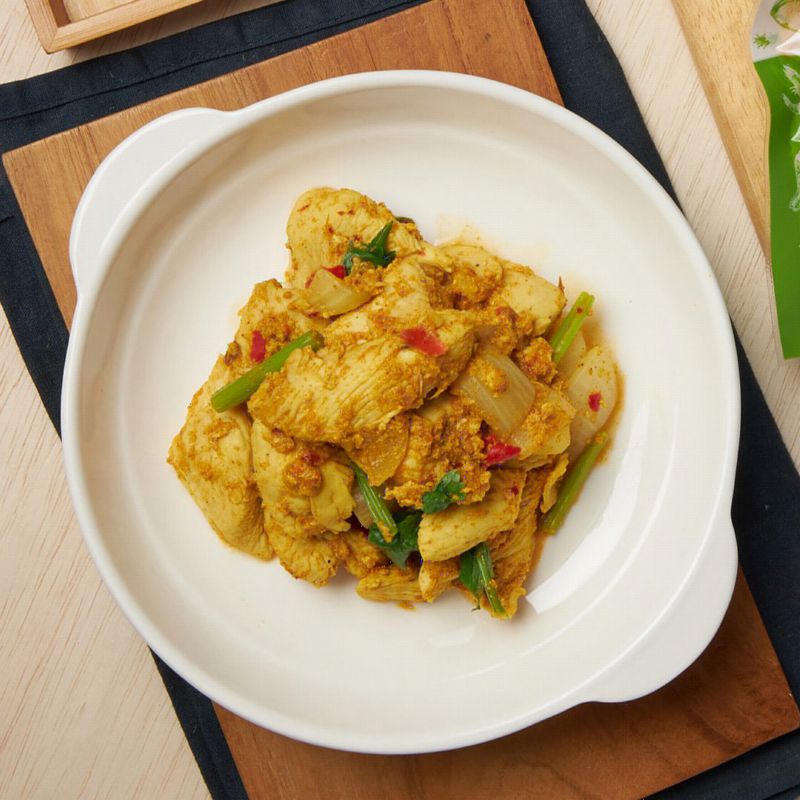
| Lunch | CleanFit Ka Pow Kai with 150 g steamed rice | 36 g |
| Dinner | 120 g boiled tilapia with vegetables | 26 g |
| Total | about 90 g |
Which protein foods work best when you are losing weight?
Choose foods with a lot of protein and not much fat, so you reach your protein target without going over your calories. Some examples per 100 g, from INMU's Thai Food Composition Database:
- Chicken breast, skinless, raw: 112 kcal, 24.9 g protein
- Nile tilapia, raw: 87 kcal, 19.4 g protein
- Banana shrimp, boiled: 104 kcal, 22.3 g protein
- Lean pork, raw: 124 kcal, 21.1 g protein
- Firm white tofu: 126 kcal, 12.9 g protein
- Whole egg, raw: 133 kcal, 13.0 g protein
How you cook matters too. Boiling, steaming, grilling or stir-frying with little oil keeps hidden oil calories down. See more comparisons in high protein foods, and detailed numbers for chicken breast and eggs.
What should you watch out for when you eat more protein?
- Protein has calories too. Each gram gives 4 kcal, using the standard Atwater factor behind food labels. So 88 g of protein is about 352 kcal, and it still counts toward your daily total
- Do not go below the minimum. Women should not eat less than 1,200 kcal a day and men not less than 1,500 kcal a day without a doctor's supervision
- Keep vegetables and some carbs. Eating more protein does not mean cutting out all rice or fruit
- Drink enough water, and spread protein through the day instead of packing it into one meal
If you have kidney disease, liver disease or diabetes, are pregnant or breastfeeding, or take regular medication, talk to a doctor or dietitian before raising your protein a lot or cutting calories. Thailand's Department of Health also advises people with health conditions to follow their doctor's advice on protein.
To work out your calories as well, read calories per day, and for the bigger picture see how to lose weight.
No time to cook? How to reach your protein target
The easiest way is to keep main dishes with a known protein count in your freezer. Most CleanFit dishes give about 20–34 g of protein per meal, such as Chicken Teriyaki at 34 g (190 kcal), Tom Kha Kai at 31 g (150 kcal) and Ok Kai Pha-Lo at 30 g (150 kcal). Every dish is made with no cooking oil, no MSG, no added sugar and no preservatives, is Thai FDA approved, and has lab-tested nutrition.
Every meal is a main dish without rice, so add rice and vegetables to match your calorie target. For breakfast, eggs, milk or yogurt can fill the gap. You choose every dish yourself, and meals keep in the freezer for up to 120 days.
Frequently asked questions
Should I use my current weight or my target weight?
Use your target weight while you are losing weight, because the fat you plan to lose needs almost no protein. Using your current weight gives a number that is higher than you need, especially if you have a lot to lose.
Do men and women use the same protein formula?
Yes, 1.6 g per kg of target weight. The total differs because target weights differ. Men usually need more calories per day as well.
Will I lose weight faster if I eat only protein and no carbs?
You do not need to. Weight loss comes from your total energy over the day, and cutting out all carbs is hard to keep up. Reaching your protein target with a sensible amount of rice or other carbs is easier to sustain.
When is the best time to eat protein?
There is no magic time. What helps more is having about 25–35 g at every meal, especially breakfast, which is often low in protein.
Do I need whey protein to lose weight?
Not if you can reach your target with food. Whey is a convenient extra for busy days, but it has calories, so count it in your daily total.

Written by the CleanFit teamCalories and protein for each CleanFit dish come from our ordering system. Figures for other foods cite the sources named in the guide.
Want to try a pack?
Choose every meal yourself, from ฿44 per meal. Every meal shows its calories and protein, and we deliver across Thailand.