Diet for beginners: what to do in your first week
Key takeaways
- In week one, find your calorie and protein targets, then log everything you eat for 2–3 days
- Build a 2:1:1 plate: 2 parts vegetables, 1 part rice or starch and 1 part protein
- Spend 20–30 minutes on your day off planning meals, and keep 3–4 backup meals in the freezer
A diet for beginners works best when you start with 4 things in the first week: know your daily calorie and protein numbers, build your plate the 2:1:1 way (2 parts vegetables, 1 part rice or starch, 1 part protein), plan your meals ahead, and have a plan for days you eat out. You do not need to change everything on day one. Make one step a habit, then add the next.
In this guide (6 sections)
- Diet for beginners: where should you start?
- How many calories and how much protein should a beginner eat?
- How do you build a 2:1:1 plate, and how much rice can you eat?
- How do you plan meals ahead so your diet lasts all week?
- How do you stick to your diet when you eat out?
- After the first week, how do you know you are on the right track?
Diet for beginners: where should you start?
Start by knowing your numbers and what you eat now, before you change anything. People who change everything on the first day often feel hungry and tired and give up within days. Try this one day at a time.
| Day | What to do | What you get |
|---|---|---|
| Day 1 | Find your daily calorie and protein targets. Weigh yourself and measure your waist | A direction, and a starting point to compare with |
| Days 2–3 | Write down everything you eat and drink as normal. Do not change anything yet | You see where the extra energy comes from |
| Day 4 | Fix the 1–2 biggest things, such as sweet drinks, fried food or late-night snacks | A big cut without changing your whole life |
| Day 5 | Build a 2:1:1 plate for at least 1 meal a day | Portion control without counting every bite |
| Day 6 | Plan next week's meals, then shop or order ahead | No food decisions while you are hungry |
| Day 7 | Review what worked and what was hard, then adjust your plan | A plan that fits your real life |
Writing things down on days 2–3 matters more than you might think. Many people find that what stops their progress is a daily Thai milk tea or snacks at work, not their main meals. Notes on your phone or a photo before each meal are enough.
How many calories and how much protein should a beginner eat?
It is different for everyone. The easiest way is to enter your sex, age, height, weight and activity level in our TDEE calculator (the page is in Thai). It works out your basic energy use with the Mifflin-St Jeor formula, multiplies it by your activity level, and gives you a weight loss target of no less than 1,200 kcal a day for women and 1,500 kcal for men.
For protein while losing weight, the calculator suggests 1.6 g per kg of your target weight. For example:
| Target weight | Protein per day | Split over 3 meals |
|---|---|---|
| 50 kg | about 80 g | about 27 g per meal |
| 55 kg | about 88 g | about 29 g per meal |
| 65 kg | about 104 g | about 35 g per meal |
| 70 kg | about 112 g | about 37 g per meal |
Why you should lose weight slowly, and why protein and sleep matter, is explained in how to lose weight. This article focuses on the practical steps.
How do you build a 2:1:1 plate, and how much rice can you eat?
The 2:1:1 plate, as recommended by the Siriraj Diabetes Center in Bangkok, uses a plate about 9 inches across, divided into 4 equal parts: 2 parts vegetables, 1 part rice or starch, and 1 part meat or other protein. If you want fruit or low-fat milk, add it as 1 separate serving.
- 2 parts vegetables: focus on leafy greens and different colors, blanched, boiled or raw
- 1 part starch: brown rice, white rice or whole wheat bread. In the Thai Food Exchange Lists, 1 ladle (thapphi) of steamed rice has about 80 kcal
- 1 part protein: choose low-fat options such as chicken breast, fish, eggs or tofu
A ready-made main dish can be your protein part. Here is a 2:1:1 plate from what you might have in the freezer:
| Part of the plate | Example | Approximate calories |
|---|---|---|
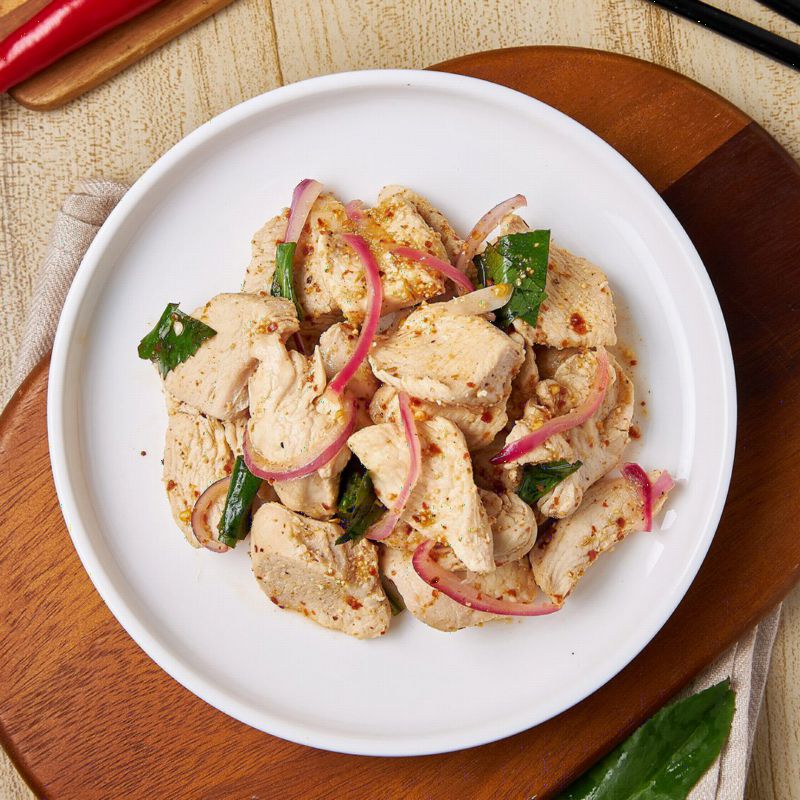
| 1 part protein | CleanFit Grilled Chicken with Garlic Sauce (32 g protein) | 160 kcal |
| 1 part starch | 1–2 ladles of brown or white rice | about 80–160 kcal |
| 2 parts vegetables | Half a plate of blanched or raw vegetables | Low. Most leafy greens are very low in energy; some vegetable groups are about 25 kcal per cooked ladle |
How do you plan meals ahead so your diet lasts all week?
Make food decisions ahead of time, before you get hungry. Spend 20–30 minutes on your day off planning, then follow the plan during the week.
- Write down breakfast, lunch and dinner for each day, using meals you know you can actually make or buy
- Make a shopping list, or decide which meals you will cook and which you will buy or order
- Keep 3–4 backup meals in the freezer for days when work runs late
- Put snacks in the plan too. See ideas in weight loss snacks
- Follow the Thai Department of Health's 6:6:1 rule for seasoning: per day, no more than 6 teaspoons of sugar, 6 teaspoons of oil and 1 teaspoon of salt, with total sodium under 2,000 mg
If you want to prepare a week of food yourself, see the steps in meal prep. If you have no time to cook, frozen meals help a lot. At CleanFit you choose every dish yourself from 38 dishes, and they keep for 120 days in the freezer. A 21-meal pack covers 3 meals a day for 7 days. Each meal is a main dish without rice. Every dish is made with no cooking oil, no MSG, no added sugar and no preservatives, is Thai FDA approved, and has lab-tested nutrition.
Enter your postal code to see your delivery date first, so you know when your plan can start.
Do we deliver to you?
Enter your postal code to see which day your order will arrive.
This postal code covers several areas. Choose your subdistrict.
Questions about delivery? Ask our team on chat.
How do you stick to your diet when you eat out?
You can eat out. Use the same 2:1:1 idea and choose dishes cooked with little oil.
- Choose boiled, steamed, grilled or salad-style (yam) dishes before deep-fried or oily stir-fries
- Ask for less oil, less rice and no sugar. Most Thai food stalls will do this
- With soups and noodle soups, eat the meat and vegetables but do not finish all the broth
- Order unsweetened drinks, or water
- At parties or buffets, take protein and vegetables first, and go up only once
- If you know dinner will be heavy, keep breakfast and lunch lighter, but do not skip them
Made-to-order Thai food stalls are where many people in Thailand eat most often. For how much the dishes differ in calories and what to say when you order, read healthy Thai food to order.
After the first week, how do you know you are on the right track?
Look at several signs together, not just one number on the scale.
- Weigh yourself once a week, on the same day and at the same time, for example Monday morning. Daily ups and downs are normal
- Measure your waist every 2 weeks. Sometimes the scale stalls while your waist shrinks
- If you are unbearably hungry, sleeping badly or low on energy, the plan is too strict
- If your weight has not moved after 2–3 weeks, write down your food for 2–3 days and check rice, oil and drinks
Losing more slowly than you hoped does not mean you failed. If you keep following your plan week after week, you are on the right track. Do not fix it by going below 1,200 kcal a day for women or 1,500 kcal for men.
Knowing the numbers for what you eat makes dieting easier. Every CleanFit dish shows its calories and protein, from 70 to 330 kcal, so you do not need to weigh anything. Just add rice to fit your 2:1:1 plate.
Frequently asked questions
Do I have to count calories at every meal forever?
No. Count or write things down for the first 1–2 weeks to see the big picture. Once you know which plates suit you, a 2:1:1 plate can replace counting every bite.
I just started and I am hungry all the time. What should I do?
First check whether each meal has enough protein and vegetables. If it does and you are still hungry, plan a snack of about 150 kcal or less, such as a boiled egg or fresh fruit, instead of waiting until you overeat at the next meal.
Will skipping breakfast or eating one meal a day make me lose weight faster?
Not by itself. What matters is your total energy for the day. Some people skip breakfast and then make up for it at dinner. Choose a meal pattern you can keep up without getting so hungry that you overeat.
What should I do on weekends or at parties?
You do not need to skip events. Plan for that meal to be heavier and keep your other meals a bit lighter. At the event, take protein and vegetables first, and the next day go back to your normal plan.
Can I still drink coffee or Thai milk tea on a diet?
Yes, but count it. Thailand's Department of Health recommends no more than 6 teaspoons of sugar a day. Ask for less sweet (wan noi) or no sugar (mai wan) and choose a small cup.

Written by the CleanFit teamCalories and protein for each CleanFit dish come from our ordering system. Figures for other foods cite the sources named in the guide.
Want to try a pack?
Choose every meal yourself, from ฿44 per meal. Every meal shows its calories and protein, and we deliver across Thailand.